
By Still We Rise Excellence Academy · Published
In the charter school vs private school choice, the first difference is who pays. A charter is a free public school run by its own board. A private school charges tuition, sets its own program and can be religious. In Florida, a Step Up For Students scholarship can pay that tuition at participating schools.
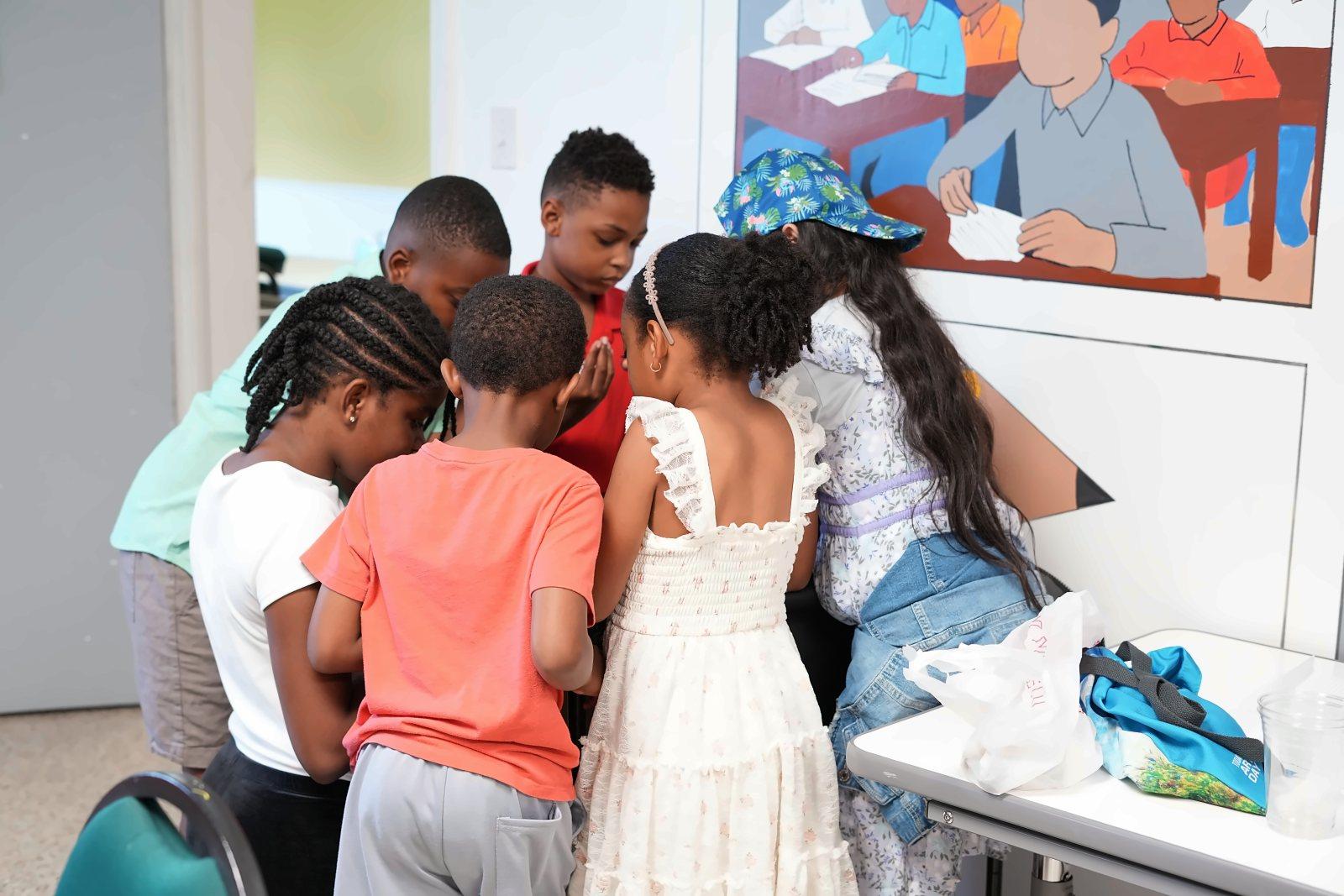
Charter school vs private school in Florida, side by side
Almost every difference comes from one fact. Florida law says all charter schools are public schools, and a private school is not part of the public system. Here is how that plays out for a family in Kissimmee.
| Topic | Charter school | Private school |
|---|---|---|
| Who pays | Charter school:No tuition. It is a public school. | Private school:Tuition, which a Step Up For Students scholarship can pay at participating schools. |
| Who runs it | Charter school:Its own governing board, under a written contract called a charter with a sponsor such as the county school board. | Private school:The school's own owners or board. |
| Who gets in | Charter school:Eligible students who apply on time. A random lottery when there are more applications than seats, after any priority groups the law allows. | Private school:The school sets its own admissions rules. |
| Faith | Charter school:No faith-based teaching. A charter must be nonsectarian. | Private school:Allowed. A private school may be religious. |
| Teachers | Charter school:Certified under Florida law, with limited exceptions for some instructional staff. | Private school:The school decides. Scholarship schools need teachers with a bachelor's degree, at least 3 years of teaching experience or special skills. |
| Yearly tests | Charter school:The statewide tests, including FAST, and the state's school grades. | Private school:Scholarship students in grades 3 to 10 take a national norm-referenced test or the state tests. |
| Class size | Charter school:Florida's class-size caps, averaged across the school. | Private school:The school decides. |
| Getting to school | Charter school:The charter is responsible, but may arrange it through the district, a company or parents. Many nearby charters do not run buses, so ask. | Private school:Usually up to the family. |
| A child with an IEP | Charter school:Charters must follow Florida's laws on services for students with disabilities. | Private school:No individual right to the special education services a public school would provide. |
What a charter school is in Florida
A Florida charter school is a free public school run by its own governing board under a written contract, called a charter, with a sponsor such as the county school board.
Under section 1002.33 of the Florida Statutes, a charter cannot charge tuition, or any registration fee beyond what other public schools charge, and it must be nonsectarian in its programs, admissions, hiring and operations. A private or church school cannot become a charter. The sponsor can decline to renew a charter or end it, and must treat student achievement as the most important factor in that decision. Programs still vary a lot from one charter to the next: near Kissimmee, some teach in two languages and others follow the International Baccalaureate.
How charter school lotteries work
A charter must enroll an eligible student who applies on time. When applications outnumber seats, the charter admits by random lottery, after any priority groups the law allows. Those groups include brothers and sisters of current students, children of the school's staff and board, and children of active-duty military families.
Students with disabilities and students in English for Speakers of Other Languages programs must have an equal chance of being selected. If your child is in an ESOL program, they must have the same chance in the lottery as any other applicant.
Ask each charter, and the district for district-managed charters, how to apply and when the lottery is. Osceola's School Choice window covers district choice and magnet programs, and our kindergarten dates guide for 2027-28 lists those dates in one place.
What every Florida charter must do
- Employ teachers certified under Florida law, with limited exceptions, and tell parents their qualifications.
- Give students the statewide tests, including FAST, and follow the state's school grading laws.
- Meet Florida's class-size caps of 18 students in kindergarten to third grade and 22 in fourth to eighth, averaged across the school.
- Give students with disabilities an equal chance in the lottery, and follow Florida's laws on services for them.
- Take responsibility for transportation, and work with the district so it is not a barrier for students within the distance set in its charter.
A child can also leave a charter at any time and enroll in another public school.
What a private school is in Florida
A Florida private school is a nonpublic school that files a survey with the state each year and is responsible for its own curriculum, teachers, testing, tuition and class size. It may be religious.
That yearly survey is a registration, not a rating. Section 1002.42 says the Legislature does not intend to regulate, control, approve or accredit private schools, and a school may not use the survey to imply that the state approves or accredits it. Accreditation, if a school has it, comes from an outside accrediting body, so ask which one.
A private school that takes Step Up scholarship students has more rules to meet under section 1002.421. Its teachers need a bachelor's degree, at least 3 years of teaching experience or special skills in the subjects they teach. It must give parents a written report on their child's progress every quarter, and scholarship students in grades 3 to 10 take a national norm-referenced test, or the state tests, every year.
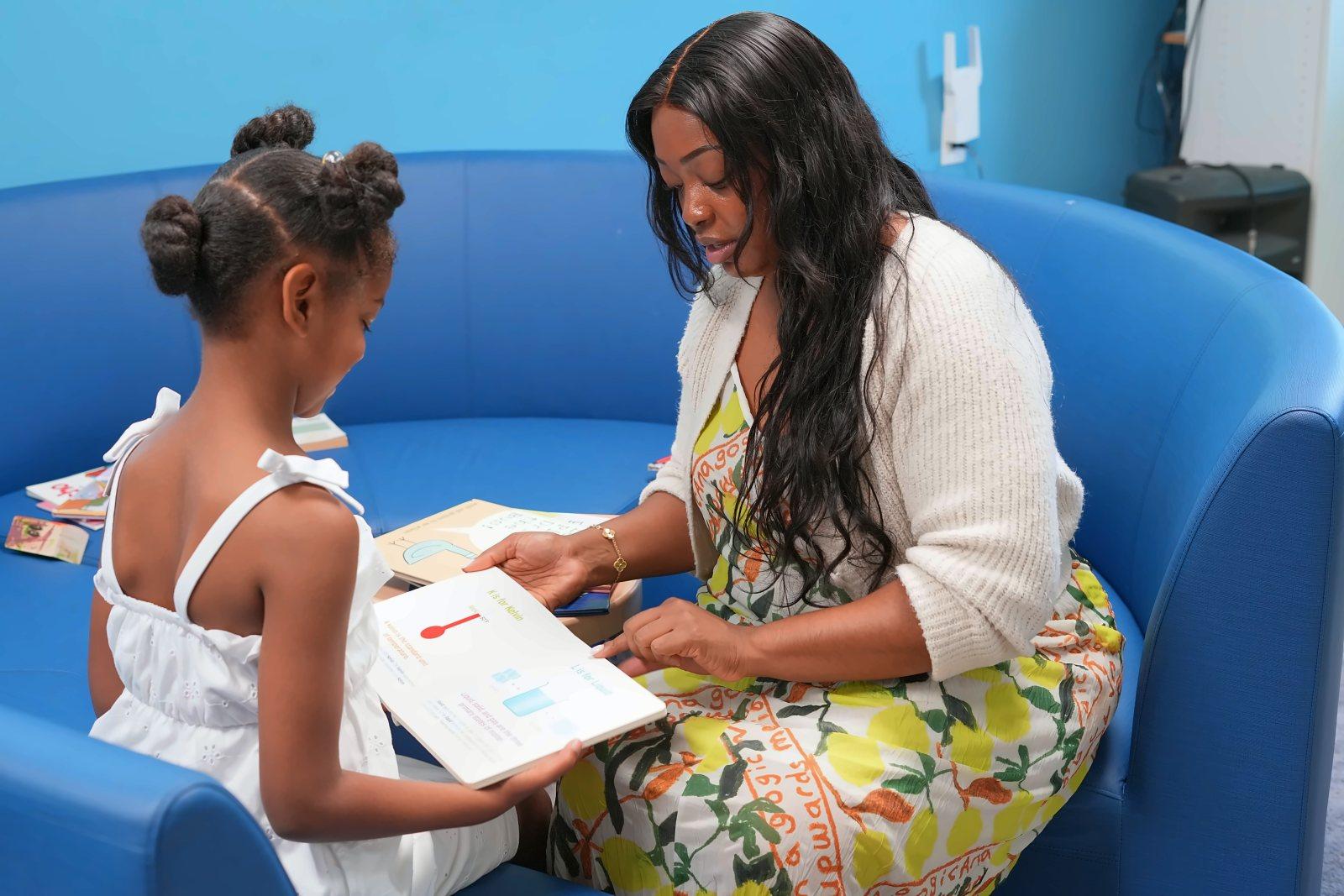
What each one costs a Kissimmee family
A charter school charges no tuition. A private school does, but Step Up For Students scholarships are open to any Florida resident who could enroll in a public school, regardless of income, and they pay tuition and fees straight to a participating school once you and the school approve the invoice.
Step Up puts the average award at about $8,000. For a family living in Osceola County, the 2026-27 amount is $8,336 for kindergarten to third grade and $7,752 for fourth and fifth grade. Switching schools this year? New Step Up applications for 2026-27 close on November 15, 2026.
| Topic | Tuition | Can Step Up pay it? | Tuition left after the award |
|---|---|---|---|
| Charter school | Tuition:$0 | Can Step Up pay it?No. A student enrolled full time in a charter cannot use the scholarship. | Tuition left after the award:$0 |
| SWREA | Tuition:$8,000, with no registration or materials fee | Can Step Up pay it?Yes | Tuition left after the award:With Osceola's amounts: $0 from kindergarten to third grade, about $248 in fourth and fifth grade |
| Other private K-5 schools near Kissimmee | Tuition:About $7,650 to $13,900, plus fees | Can Step Up pay it?Yes, at participating schools | Tuition left after the award:Often about $850 to $6,000 a year after an average $8,000 award |
Tuition-free is not always cost-free. Ask any charter what families pay for uniforms, supplies, field trips and care before and after school. Ask any private school for every fee in writing, then subtract your award. What private school costs in Kissimmee goes through the fees line by line.
A six-question fit check before you choose
Neither kind of school is better for every child. These six questions sort your options by what matters to your family. Answer them for every school on your list, charter and private alike.
- Faith. Do you want faith taught as part of the school day? Of the two, only a private school can do that.
- Real cost. What will you pay in a year after your Step Up award, counting every fee, uniforms and care? Get each school's answer in writing.
- Getting in. Is there a lottery date, an entrance test or a requirement your child might not meet? Write down every deadline.
- Getting there. Who takes your child to school and home again, and what does that cost?
- Support. Does your child have an IEP? Read the next section before you decide.
- Measuring progress. A charter reports state test results and a school grade. A scholarship private school sends a written progress report every quarter, plus a yearly test from third grade. Which tells you more about your child?
If your child has an IEP
Settle this before anything else, because the rules are different at each kind of school.
A charter school is a public school. It must give students with disabilities an equal chance in its lottery, and it is not exempt from Florida's laws on services for students with disabilities.
A private school is different. Under federal special education rules, a child whose parents choose a private school has no individual right to receive some or all of the special education and related services they would get in a public school. Every private school in Florida's scholarship programs must tell parents this, on its website or in writing.
Florida's FES-UA scholarship is for students with certain disabilities. Once a child receives it, the school district no longer owes that child a free appropriate public education, although district staff must still write an IEP or a matrix of services if a parent asks. Our page on the FES-UA scholarship explains who qualifies.
Before you withdraw a child with an IEP from a public or charter school, talk with the IEP team and with Step Up For Students about what will change, and ask each private school you are considering, including ours, to tell you in writing what support it can give your child. This is general information, not legal advice.
The next hurdle: applying to both without losing a seat
Many families keep a charter and a private school on the list until spring. That works if you track the dates, because each one runs on its own calendar and the deadlines fall months apart.
- Now. List every school you are considering, charter and private, with the date each one closes applications.
- Switching this school year? Step Up's new applications for 2026-27 close on November 15, 2026. New students must accept the award by December 15, and a child must be enrolled by January 15, 2027 to be funded this year.
- November 19, 2026 to January 25, 2027. Osceola's School Choice window for 2027-28 runs for district choice and magnet programs. Magnet applications close earlier, around January 8, 2027. Confirm the dates with the district before you rely on them.
- Winter. Apply to each charter you are considering, and ask for its lottery date.
- Early 2027. Watch for Step Up's 2027-28 applications. They are not open yet; for 2026-27, the window opened February 1.
- Spring. Compare the offers you actually have, using the six questions above.
One rule catches families out. Your child cannot be enrolled full time in a charter, or any public school, while using a Step Up scholarship. A student who has accepted the award and is found enrolled full time in a public school forfeits it for the entire year. Before the first day at a private school, make sure the public or charter school has withdrawn your child. This is general information, not legal advice.
Private school admissions vary more than parents expect, too. Some local schools require an entrance test, scores above a set percentile, church attendance or fluent English. Our guide to choosing a private elementary school in Kissimmee lists the questions to ask, and how Step Up For Students works covers each stage of the scholarship. Already partway through a year? Changing schools mid-year explains how a move works.
Where SWREA fits
Still We Rise Excellence Academy is a private school, so it is not free the way a charter is. Here is what that means for a family.
- A Christ-centered Montessori school for kindergarten through fifth grade at 1904 Michigan Avenue in Kissimmee.
- Tuition is $8,000 a year with no registration or materials fee. For an Osceola family the 2026-27 award covers it in full from kindergarten to third grade and leaves about $248 in fourth and fifth grade.
- School runs 9:00 AM to 3:00 PM, Monday to Friday. There is no uniform to buy, and lunch is packed from home.
- Twelve children to a teacher, with English and Spanish every day. Families can also read about SWREA in Spanish.
- No admissions testing, no church membership requirement and no English fluency requirement. Children can start in any grade on any school day.
- A transportation partner can help get your child to school. The cost depends on where you live and the days you need.
- Registered with the Florida Department of Education and a member school of the American Montessori Society. Our credentials, explained plainly, include what membership is not.
If a free seat matters more to your family than faith in the school day, a charter may suit you better, and that is a fair choice. If you want faith to be part of your child's school day, a charter cannot offer it, and a private school can.
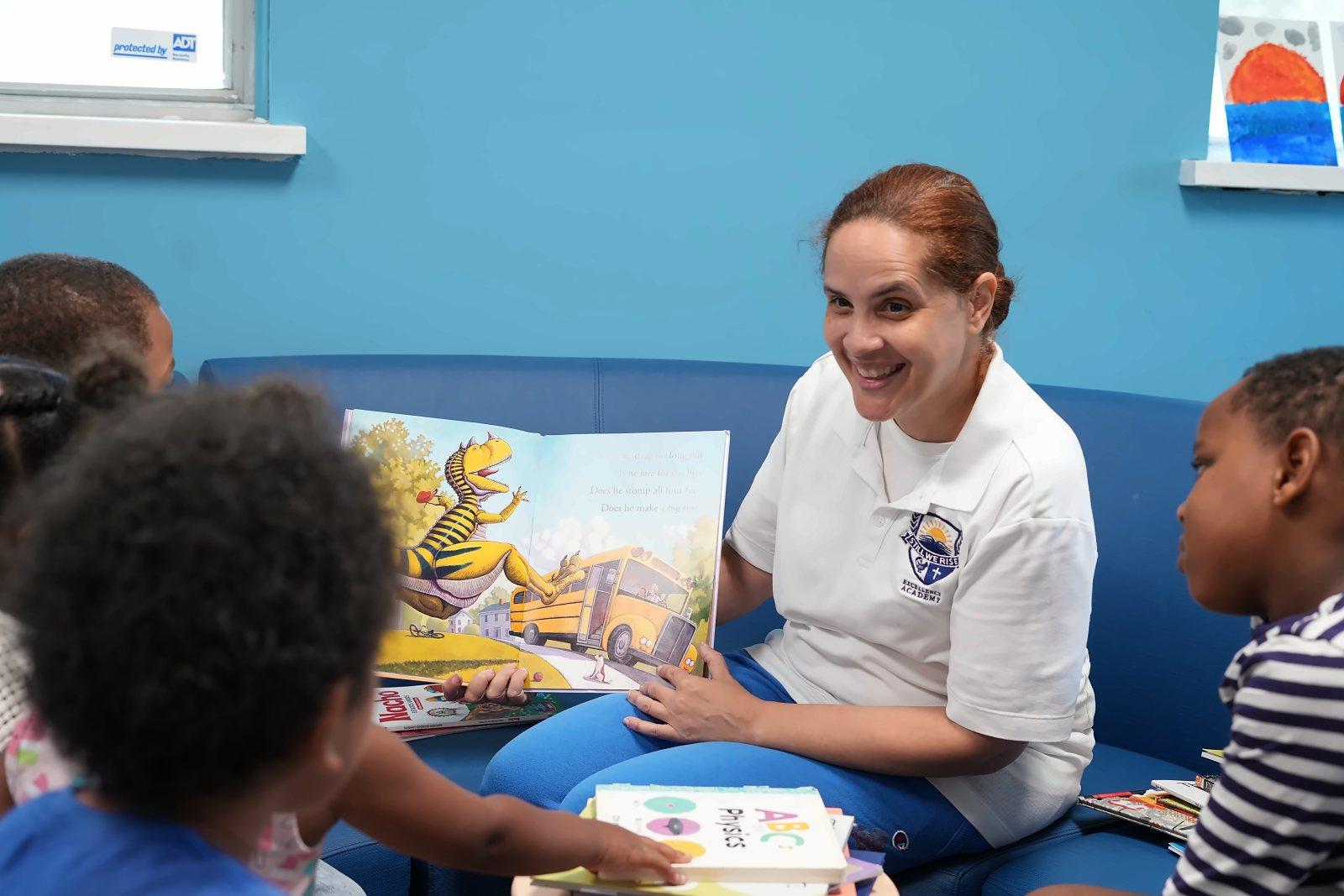
Common questions
- Is a charter school a private school?
- No. Florida law says all charter schools are public schools and part of the state's program of public education. A charter is run by its own board under a contract with a sponsor, but it charges no tuition and must be nonsectarian. A private, parochial or home school cannot become a charter.
- Can I use a Step Up scholarship at a charter school in Florida?
- No. Charter schools are public schools and charge no tuition, and Florida law says a student enrolled full time in a public school, including a charter, cannot hold the scholarship. Step Up scholarships pay tuition and fees at participating private schools. This is general information, not legal advice.
- Do Florida charter schools cost money?
- Florida charter schools cannot charge tuition, or registration fees beyond what other public schools charge, because they are public schools. Families may still pay for things like uniforms, supplies, field trips, and care before and after school. Ask each charter for a list of what families pay in a typical year.
- Is a charter school better than a private school?
- Neither is better for every child. A charter is free and follows state testing and class-size rules. A private school sets its own program and can be religious, and a Step Up scholarship can pay its tuition at participating schools. Compare each school on faith, real cost, admissions, transport, support and how progress is measured.
- Can a charter school be religious in Florida?
- No. Florida law requires every charter school to be nonsectarian in its programs, admissions, hiring and operations, and a private or church school cannot become a charter. A school that teaches faith as part of its program, Montessori or otherwise, has to be a private school.
- Do private schools in Florida take the FAST test?
- Florida does not require private schools to give the FAST tests. Scholarship students in grades 3 to 10 must take a national norm-referenced test approved by the state, or the statewide tests, every year, and their school sends parents a written progress report each quarter.
- Does my child keep an IEP at a private school?
- Not in the same way. A child whose parents choose a private school has no individual right to the special education services a public school would provide. A charter school is a public school and must follow Florida's disability services laws. Talk with your IEP team before you move a child with an IEP.
- Do charter schools in Florida provide transportation?
- The charter school is responsible for transportation, but it may arrange it through the district, a private company or parents. The charter and the district must make sure it is not a barrier for students living within the distance set in that school's charter. Many charters near Kissimmee do not run buses, so ask.
Sources
- Florida Statutes (2026), section 1002.33: Charter schools
- Florida Statutes (2026), section 1002.42: Private schools
- Florida Statutes (2026), section 1002.421: Requirements for scholarship private schools
- Florida Statutes (2026), section 1002.394: Family Empowerment Scholarship
- Florida Statutes (2026), section 1002.395: Florida Tax Credit Scholarship
- Step Up For Students: Private School Scholarship
- Step Up For Students: 2026-27 scholarship amounts by district (PDF)
- Step Up For Students: 2026-27 scholarship application dates (PDF)
- Step Up For Students: 2026-27 scholarship acceptance dates (PDF)
- Step Up For Students: 2026-27 scholarship schedule (PDF)
- Step Up For Students: 2026-27 Private School Family Handbook
- 34 CFR 300.137: Federal rule on services for children placed in private schools by their parents
- School District of Osceola County: Educational Choices and Innovation