
From the classroom · The first weeks of school, August 2026
Isopods under the magnifying glass
Lab coats, goggles and a classroom habitat: how SWREA's youngest scientists start with observation, and why that is the heart of the Research Institute of Planet Earth.
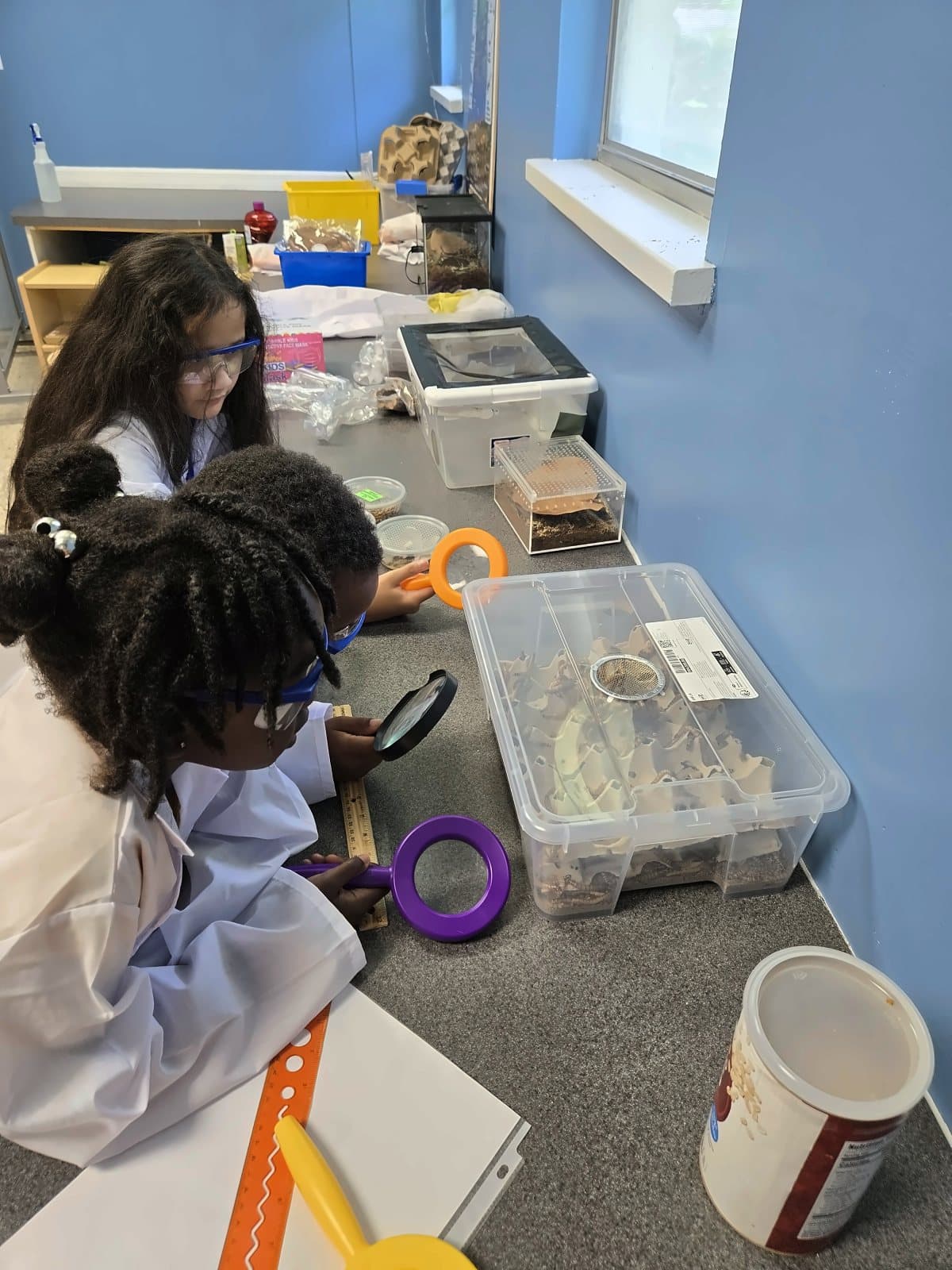
The isopods arrived before most of the furniture had settled. In the first weeks of school the class set up a habitat for them, and the children in lab coats and safety goggles spent part of each science block simply watching: how the isopods move, where they hide, what they do when the soil is damp and when it is dry.
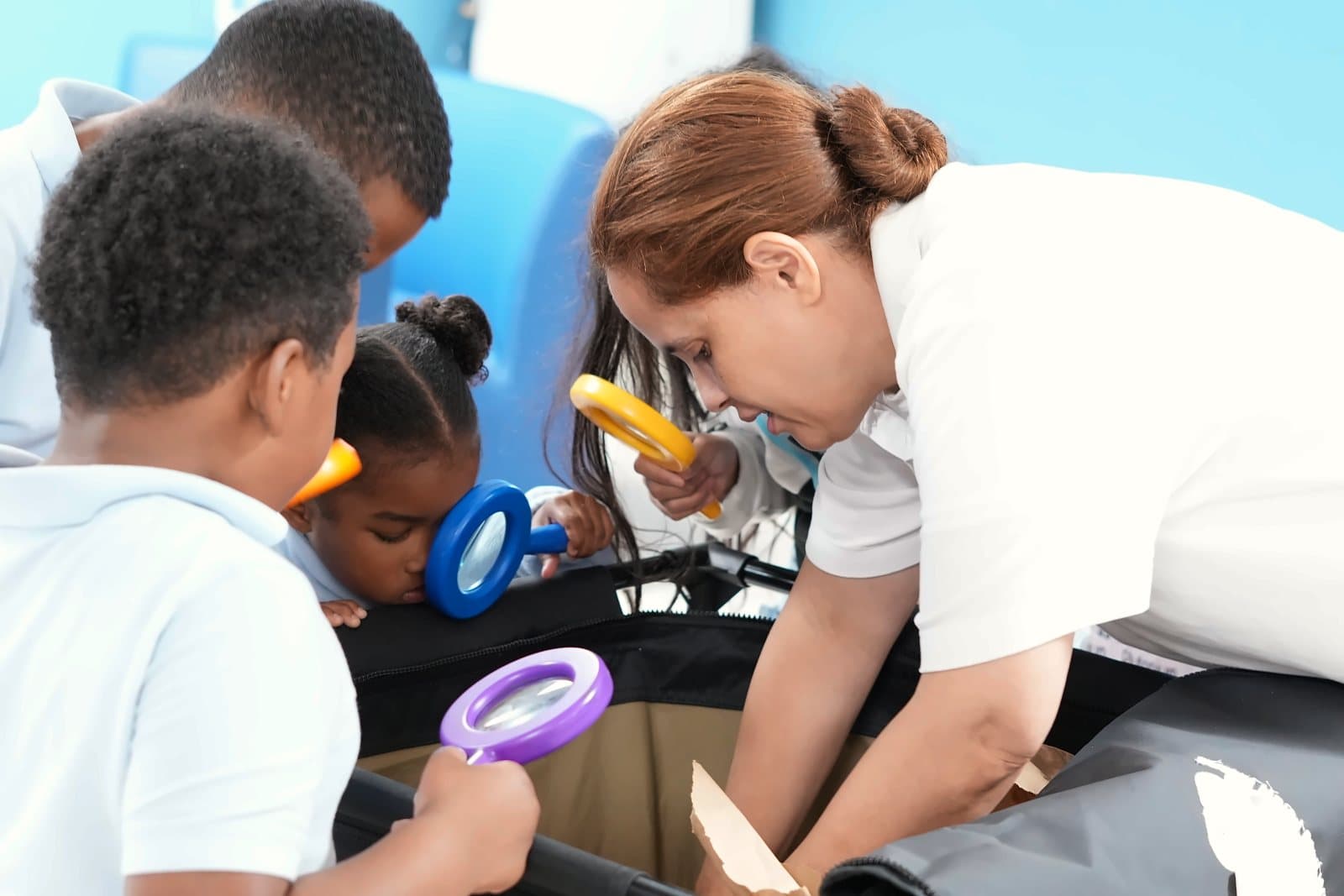
Watching first is the point. Children are quick to explain and slow to look, and the Montessori science table is arranged to reverse that. A magnifying glass, a notebook and a real living thing give a five-year-old and a nine-year-old the same job: look closely, say what you see, and only then say what you think it means.
This is how the school's Research Institute of Planet Earth works all year. Small teams take a guiding question, investigate it with their hands, record what they find and present it to the class. The isopods were the first question of the year. The lab coats, which the children earned along with their science badges, are a small sign that the work is taken seriously.
Published October 10, 2026. Photo taken the first weeks of school, August 2026.
What this shows
Learning
Observing and recording before explaining; living and nonliving things; what an animal needs to survive. From the K-1 and 2-3 science strands of the curriculum.
Character
Caring for a living creature that depends on you, and sharing one habitat and one set of magnifiers among a team.
See it for yourself.
Visits run Tuesday to Friday while classes are in session and last about an hour.
More from the classroom
Painting side by side
Two children, one table, a row of paintings drying on the windowsill. What art at a Montessori school teaches about sharing materials and finishing work.
Story time in two languages
Maestra Nuñez reads to the class, and the room listens in English and Spanish. What a picture book teaches about language, patience and belonging.
Word cards on the reading rug
How reading starts at SWREA: a child, a rug and a set of word cards. Phonics from the first day, built with the hands before it is written on paper.